General
ChatGPT for Business Malaysia: How SMEs & Enterprises Are Winning with AI
· By AIHQ Team

Most Malaysian businesses now know what ChatGPT is. The harder question is whether it actually delivers value beyond experimentation.
Leaders across Malaysian SMEs and enterprises are asking the same questions:
- Is ChatGPT a productivity tool or a distraction?
- How do we move from 'try it' to 'it works'?
- Where are other Malaysian businesses seeing real returns?
- What about data privacy and responsible use?
This article answers those questions with real-world adoption patterns, practical use cases and implementation playbooks tailored to the Malaysian market.
We cover how local businesses — from retail and media to financial services and professional firms — are using ChatGPT to reduce costs, improve workflows and support revenue outcomes. You will also find a framework for moving from experimentation to structured, sustainable AI adoption.
Why ChatGPT Adoption Differs for Malaysian Businesses
ChatGPT deployment in Malaysia is not simply a copy-paste of Silicon Valley playbooks. Several local factors shape how ChatGPT works (or does not) for business use:
Language diversity. Many Malaysian businesses operate across English, Bahasa Malaysia and Mandarin. While ChatGPT performs well in English, accuracy and cultural nuance in Bahasa Malaysia require careful testing before customer-facing deployment.
Regulatory context. Malaysia's Personal Data Protection Act (PDPA) governs how customer and employee data is handled. Tools like ChatGPT process data through global servers unless configured carefully, making data governance a priority.
Workforce readiness. Many organisations find that employees try ChatGPT independently but inconsistently. Some become power users; others never return after a mediocre first attempt. Structured capability building matters more here than in markets with deeper AI familiarity.
Infrastructure and access. Not all organisations have consistent access to the latest models (GPT-4, GPT-4 Turbo) or enterprise-grade accounts with data privacy controls.
These factors mean that ChatGPT for business in Malaysia requires localised thinking — not just tool knowledge, but workflow design, governance and role-based adoption.
Real Use Case 1: Customer Service Resolution at Lower Cost
A mid-sized Malaysian retail group handling thousands of customer enquiries weekly across WhatsApp, Facebook Messenger and email faced a familiar problem: response times were slipping, and scaling their support team was expensive.
The approach. Rather than replacing human agents, the team deployed ChatGPT integrated into their customer service workflow as a first-response agent for common enquiries — order status, return policies, store hours and product availability.
The results.
- First-response time dropped from 12 hours to under 5 minutes
- Human agents handled 40% fewer repetitive Tier 1 queries
- Customer satisfaction scores remained stable or improved
- Support team could focus on complex or escalated cases
Key lesson for Malaysian businesses. The cost saving came not from removing people, but from removing repetitive work. Agents who previously spent half their day answering the same questions could now handle higher-value conversations around returns, complaints and product advice.
Note: Off-the-shelf ChatGPT worked for the simpler queries. For deeper escalation workflows — such as connecting customer history, order tracking and personalised product recommendations — a custom AI chatbot may be more appropriate.
Real Use Case 2: Content and Marketing Workflow Acceleration
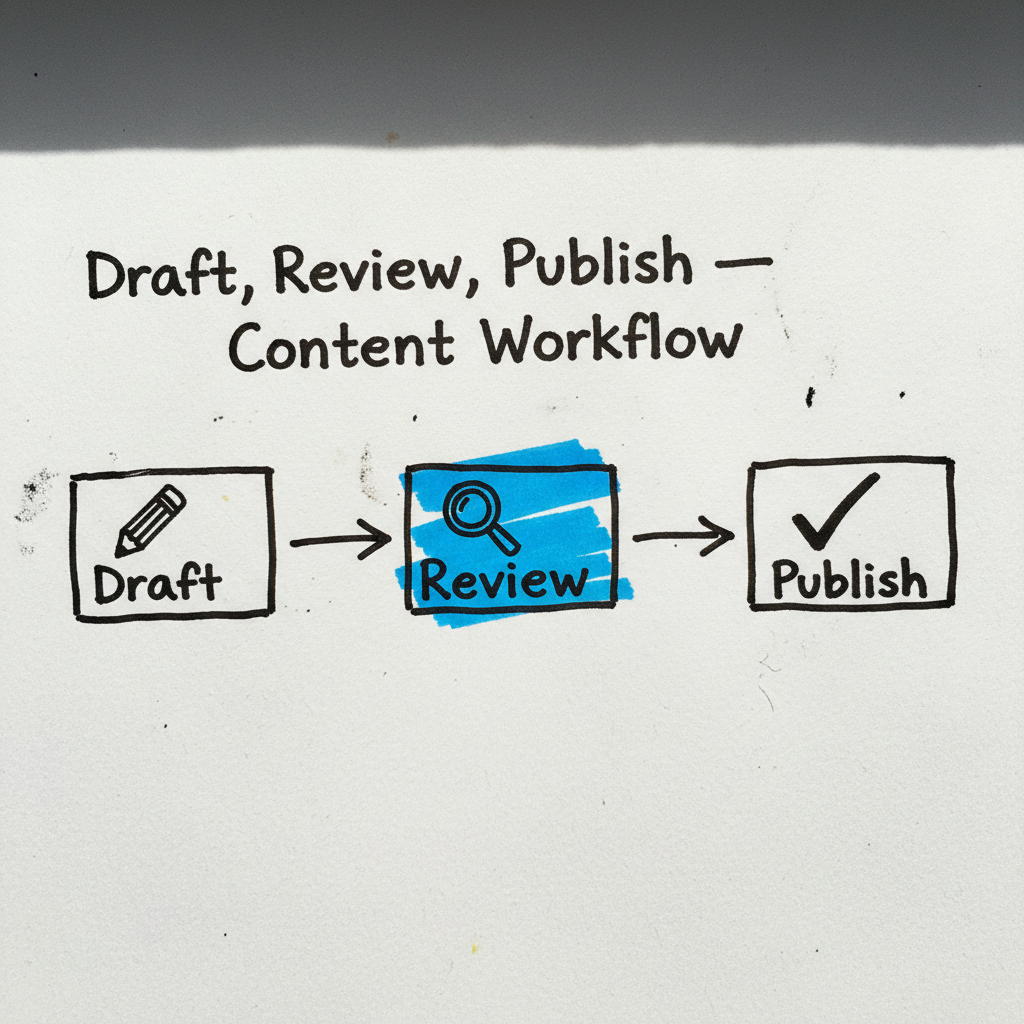
Content teams saw a 30% volume increase using ChatGPT for drafting and summarising only.
A Malaysian media and content team producing daily articles, social posts and internal reports needed to produce more with the same team size.
The approach. Rather than using ChatGPT to write full articles (which required extensive fact-checking and editing), the team used it for:
- Drafting interview questions and outlines
- Summarising research into digestible briefs
- Generating multiple headline options for A/B testing
- Rewriting internal communications for clarity
- First-draft social media captions for review
The results.
- Content production volume increased by roughly 30%
- Time spent on drafting and editing was significantly reduced
- Journalists and writers retained editorial control and final approval
- Team morale improved as repetitive drafting work decreased
Key lesson for Malaysian businesses. The fastest productivity gains came from using ChatGPT for drafting and summarising, not for finished output. Professional judgment, local context and editorial review remained essential.
Real Use Case 3: Financial Reporting and Data Summarisation
A Malaysian service organisation with quarterly reporting requirements found that managers spent days manually pulling numbers, formatting tables and writing commentary.
The approach. The finance team used ChatGPT (with anonymised, non-confidential data) to:
- Draft commentary on variance analysis
- Summarise long financial reports into executive summaries
- Generate first-draft board presentation notes
- Create standardised reporting templates
The results.
- Report preparation time decreased noticeably
- Managers could focus on analysis rather than formatting
- Standardised templates improved consistency across departments
Key lesson for Malaysian businesses. ChatGPT works well for structured, repeatable writing tasks where the input data is clean and the output format is predictable. It does not replace financial judgment — but it meaningfully reduces the time spent on documentation.
The Cost-Saving Metrics That Matter
Early-adopting Malaysian businesses report that ChatGPT creates value in three cost categories:
| Cost Category | Typical Savings Pattern |
|---|---|
| Time on repetitive writing tasks | 20–40% reduction in drafting time |
| Customer service Tier 1 handling | 30–50% reduction in human-handled Tier 1 queries |
| Internal documentation and reporting | 25–35% faster report generation |
These figures are directional, not guaranteed. Actual outcomes depend on the organisation's workflows, data quality, employee adoption and measurement approach.
The Adoption Playbook: Moving Beyond Experimentation
Most Malaysian businesses that succeed with ChatGPT follow a common pattern. Here is a practical playbook based on what works locally:
Phase 1: Awareness and Safe Exploration (Weeks 1–4)
- Identify 5–10 willing early adopters across different departments
- Provide basic responsible-use guidance (what not to share, how to verify output)
- Let teams experiment on low-risk, non-customer-facing tasks
- Collect examples of what worked and what did not
Phase 2: Role-Based Capability Building (Weeks 5–12)
- Map ChatGPT use cases to specific roles (customer service, marketing, finance, HR, operations)
- Run structured, role-based workshops rather than generic tool training
- Establish guidelines for data privacy and human review
- Measure time saved and quality improvement in pilot teams
Phase 3: Workflow Integration and Governance (Weeks 13–24)
- Embed ChatGPT into real workflows with clear handoffs (draft → review → approve)
- Set organisational AI usage policies covering data safety, accuracy checks and escalation
- Identify workflows where off-the-shelf ChatGPT is not enough (requires custom AI solutions)
- Measure outcomes and adjust adoption roadmap
When Off-the-Shelf ChatGPT Is Not Enough
Many Malaysian businesses find that ChatGPT handles general productivity tasks well, but specific workflows need more:
- Customer-facing chatbots that need access to your product catalogue, order system and return policies
- Internal copilots that answer questions from your company's SOPs, HR policies and training manuals
- Automated report generation that pulls real-time data from your internal systems
In these cases, off-the-shelf tools can be useful starting points, but some workflows require custom AI workflows or structured implementation support.
Responsible Use Matters from Day One
Malaysian businesses deploying ChatGPT should establish basic guardrails early:
- Do not share confidential customer or employee data in public ChatGPT instances
- Always verify AI-generated output before using it with customers or in official documents
- Set clear guidelines for which tasks ChatGPT can support and where human judgment is required
- Consider enterprise accounts where available for stronger data privacy controls
For organisations scaling AI usage, responsible AI training and governance workshops can help teams use AI tools safely and appropriately.
Moving from ChatGPT Experimentation to Structured Adoption
The businesses seeing real returns from ChatGPT in Malaysia are not the ones that simply gave everyone access. They are the ones that:
- Started with specific use cases mapped to real workflow pain points
- Invested in role-based capability rather than generic tool training
- Set responsible-use guidelines before scaling
- Measured outcomes to understand where value was actually created
- Recognised when custom solutions were needed for deeper workflow challenges
ChatGPT is a powerful tool for Malaysian businesses — but its value depends on how it is adopted, governed and integrated into real work.
How AIHQ Helps Malaysian Businesses Adopt ChatGPT and AI
AIHQ has trained and engaged over 9,000 professionals across corporate, public sector, professional and regulated environments in Malaysia. Our approach moves beyond generic ChatGPT workshops into structured, role-based capability building that connects AI tools to actual workflows.
We support organisations through:
- Role-based AI training — helping teams in customer service, marketing, finance, HR and operations apply ChatGPT to their daily work
- Leadership AI briefings — aligning senior management on strategy, risks, governance and practical next steps
- AI innovation bootcamps — identifying and prioritising AI use cases worth piloting
- Custom AI solutions — building chatbots, internal copilots and workflow automation where off-the-shelf tools are not enough
- Responsible AI governance — helping organisations use AI safely and appropriately
Frequently Asked Questions
Is ChatGPT safe for use with customer data in Malaysia?
Data safety depends on the tool settings, subscription tier and how the organisation manages data sharing. Public ChatGPT instances should not be used with confidential or personally identifiable customer information. Enterprise-grade accounts and clear internal policies help reduce risk. AIHQ recommends setting clear guardrails for responsible AI use, especially around sensitive information.
Can small and medium-sized enterprises (SMEs) in Malaysia afford ChatGPT for business?
Yes. ChatGPT offers free and paid tiers. The paid ChatGPT Plus plan is relatively low-cost and suitable for many SMEs. For more complex needs — such as customer-facing chatbots or internal knowledge assistants — a custom AI solution may be worth exploring, with costs varying based on scope.
Does ChatGPT work well in Bahasa Malaysia for business use?
ChatGPT performs reasonably well in Bahasa Malaysia for general tasks, but accuracy and cultural nuance should be tested before customer-facing deployment. For Bahasa Malaysia-specific workflows, AIHQ recommends testing on real use cases and reviewing outputs carefully.
What is the difference between using ChatGPT directly and building a custom AI chatbot?
Using ChatGPT directly works well for internal productivity tasks like drafting, summarising and research. A custom AI chatbot is better suited for customer-facing interactions, internal knowledge retrieval (SOPs, policies) and workflows that need access to your specific data and systems.
How long does it take for a Malaysian business to see real results from ChatGPT?
This depends on the organisation's readiness, use-case selection and adoption approach. Some businesses see time savings within weeks on specific writing or summarisation tasks. Deeper workflow integration typically takes one to three months, especially when structured capability building and governance are involved.
Does AIHQ offer HRDC-claimable ChatGPT training programmes?
AIHQ is a registered HRD Corp training provider. Programmes can be structured to be HRDC claimable, subject to client eligibility, grant approval and HRD Corp submission requirements. Contact AIHQ to discuss your organisation's needs.
FAQ
Is ChatGPT safe for use with customer data in Malaysia?
Data safety depends on the tool settings, subscription tier and how the organisation manages data sharing. Public ChatGPT instances should not be used with confidential or personally identifiable customer information. Enterprise-grade accounts and clear internal policies help reduce risk. AIHQ recommends setting clear guardrails for responsible AI use, especially around sensitive information.
Can small and medium-sized enterprises (SMEs) in Malaysia afford ChatGPT for business?
Yes. ChatGPT offers free and paid tiers. The paid ChatGPT Plus plan is relatively low-cost and suitable for many SMEs. For more complex needs — such as customer-facing chatbots or internal knowledge assistants — a custom AI solution may be worth exploring, with costs varying based on scope.
Does ChatGPT work well in Bahasa Malaysia for business use?
ChatGPT performs reasonably well in Bahasa Malaysia for general tasks, but accuracy and cultural nuance should be tested before customer-facing deployment. For Bahasa Malaysia-specific workflows, AIHQ recommends testing on real use cases and reviewing outputs carefully.
What is the difference between using ChatGPT directly and building a custom AI chatbot?
Using ChatGPT directly works well for internal productivity tasks like drafting, summarising and research. A custom AI chatbot is better suited for customer-facing interactions, internal knowledge retrieval (SOPs, policies) and workflows that need access to your specific data and systems.
How long does it take for a Malaysian business to see real results from ChatGPT?
Some businesses see time savings within weeks on specific writing or summarisation tasks. Deeper workflow integration typically takes one to three months, especially when structured capability building and governance are involved.
Does AIHQ offer HRDC-claimable ChatGPT training programmes?
AIHQ is a registered HRD Corp training provider. Programmes can be structured to be HRDC claimable, subject to client eligibility, grant approval and HRD Corp submission requirements. Contact AIHQ to discuss your organisation's needs.